Landscapes
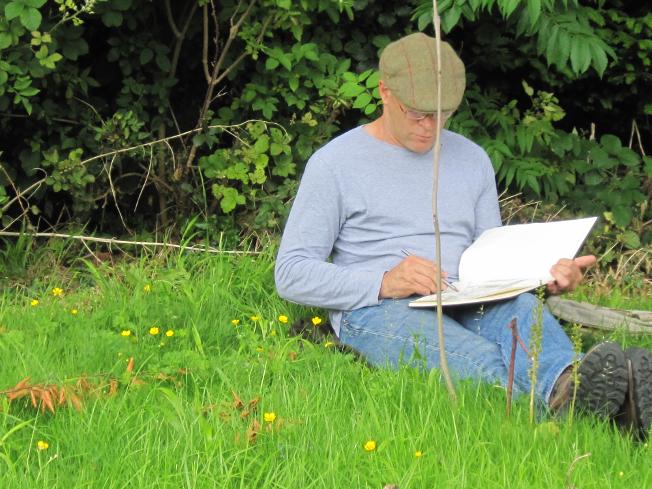
Above: In a church graveyard in Clayton, East Sussex, England in 2018
Introduction
I cannot remember when I started sketching and painting landscapes. It's like I always have.
Perhaps growing up in Taranaki, New Zealand, with the vast and impressive Mt Taranaki at our back door, stimulated my interest in observing landscapes from a young age. Through the seasons and sometimes through the day we could watch as the light and atmosphere changed and the colour and apparent mood of the mountain changed with it. Later, when our family moved to Auckland, a city on a narrow isthmus with two contrasting harbours and 53 volcanoes, I came to appreciate the sea, the beaches, the islands off the coast and the sprawling suburbs with their modest bungalows.
For me, painting landscapes is an expression of my appreciation of the natural environment and this appreciation unfolds in two ways: developing conscious awareness of where I am and making connection and, anchoring my memories to a concrete actions.
When I am out in the open space of the countryside, and sometimes urban spaces, I am drawn to sketching. Sketching helps to anchor me in the place I find myself. By carefully observing as I sketch, I develop an appreciation of the all the varieties of colours, shapes and textures that surround me. Every place, every view has a different ambience and I aim to capture the uniqueness of each place that I draw. The process of sketching gives me a deeper memory than one obtained from just taking a photograph.
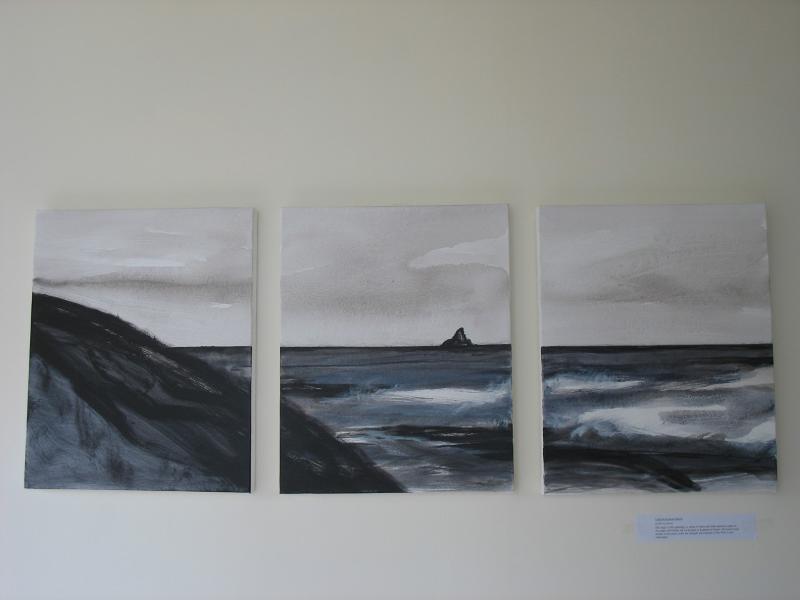
The painting above is called Bethels Beach Triptych and you can listen to me talking about this painting in the recording below.
Bethels Beach Triptych.mp3
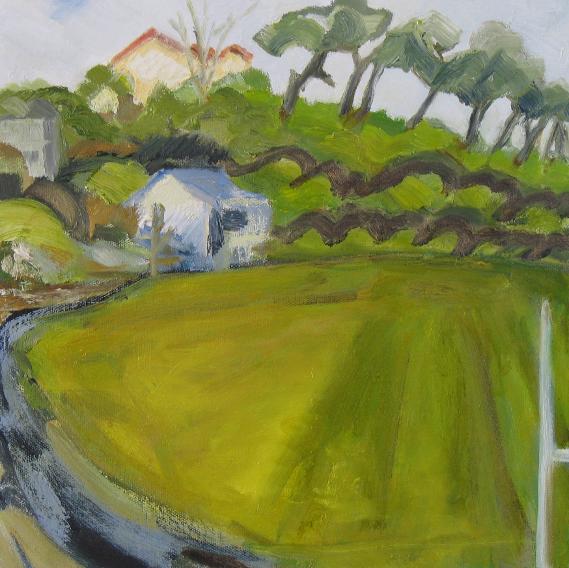
Playing Fields.mp3
The painting above is called Playing Fields. For more information about this painting, listen to the short recording about it, above.
The painting below is called Barn Door and you can hear about it by clicking on the recording below the painting.
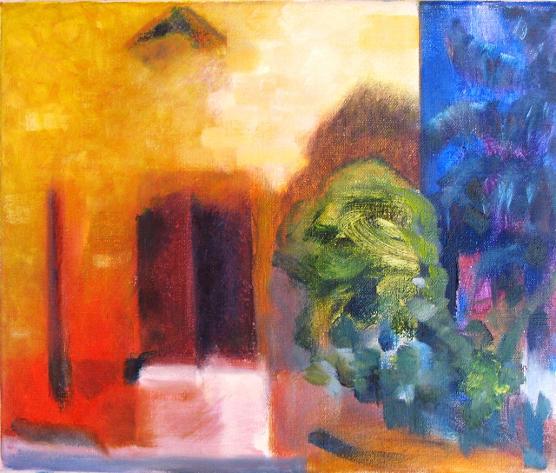
Barn Door.mp3
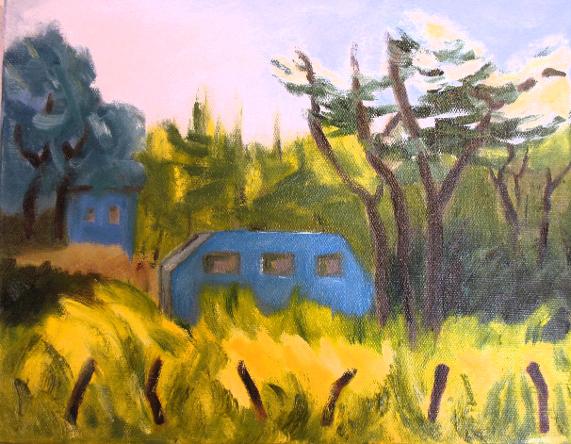
Blue Caravan North Devon.mp3
The painting above is Blue Caravan North Devon. Just above I speak to this painting.
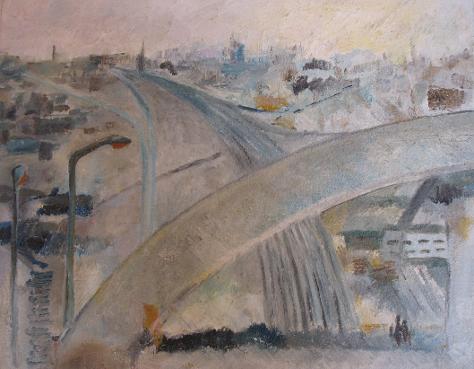
Willesden Junction.mp3
This painting above is called Willesden Junction. You can listen to my thoughts about this painting .
Final Thoughts
Sometimes I'm asked why don’t I paint a lot of people in my landscapes. Some say that my paintings make the world look unpopulated. Well, actually I do include people in some of my paintings but I agree that I often do prefer to emphasize the shapes of the land and sea, the plants and the buildings. Figures in a landscape draw the eye and begin a different narrative in the viewer’s mind. This is limiting, I often prefer to keep things abstract and free.
The process of making a landscape painting can be quite long. It usually involves reviewing sketches and comparing these with photographs of the place. I often make additional colour drawings and then commit to using oils.
When the painting becomes more abstracted, the process is much slower and undergoes many revisions and re-statements, until I arrive at a place I am happy with. The painting below belongs to a series of three, which all underwent drastic review and repainting. They have become suggestive of a place and non-literal.
If I think about other people appreciating my paintings, then I do think landscapes are generally more satisfying for others. It gives me great pleasure to think that the subjects of my landscape paintings help others to remember or connect with those places, or places similar, or that they can enjoy the colours, shapes and textures of the view, perhaps unfamiliar to them, as much as I have enjoyed painting it.
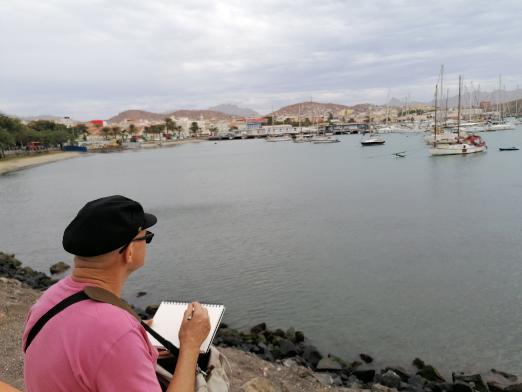
In Mindelo, Cape Verde, Africa in January 2020